By Devansh Singhal · Published · Updated
Three Numbers, Three Different Questions
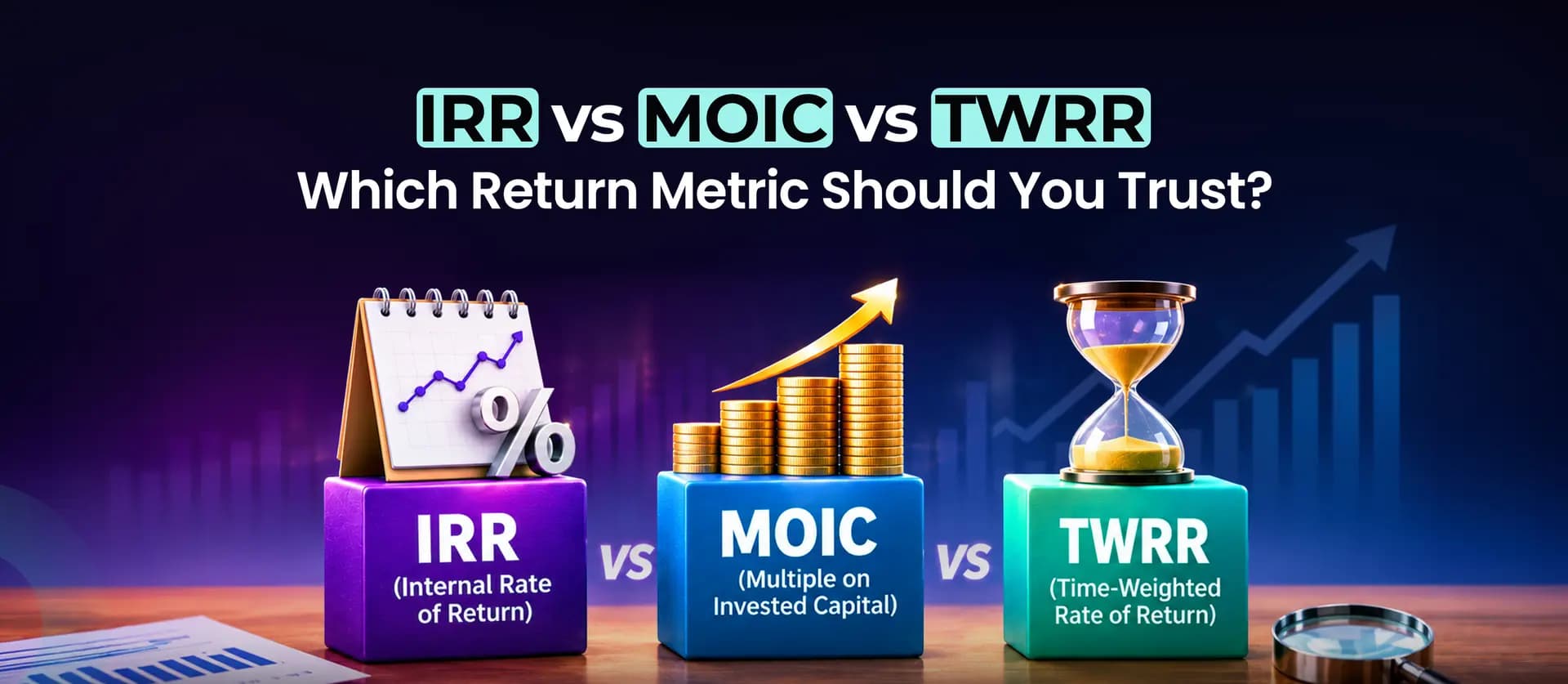
Every fund factsheet quotes returns, but not every return figure answers the same question. IRR, MOIC and TWRR each measure performance from a different angle, and comparing them directly is like comparing a car's top speed with its fuel efficiency. For investors in Alternative Investment Funds (AIFs), knowing which metric you are looking at is the first step to judging whether a fund has delivered.
The Internal Rate of Return (IRR) is the annualised rate at which your invested cash flows grow, taking into account when money went in and when it came back. That makes it the standard for private-market strategies such as private equity, venture capital and real estate or credit funds, where capital is drawn and distributed in stages. A fund that returns capital early will show a higher IRR than one that returns the same amount late. The flip side is that IRR can flatter a fund that exits quickly, and it implicitly assumes interim distributions can be reinvested at the same rate, which is rarely realistic. IRR also makes no distinction between a modest gain made quickly and a larger gain made slowly.
MOIC: The Metric That Ignores the Clock
The Multiple on Invested Capital (MOIC) is the simplest of the three: total value received (realised plus unrealised) divided by capital invested. A MOIC of 1.8x means every ₹1 invested is now worth ₹1.80. This shows how much wealth was created, which IRR can obscure. But MOIC says nothing about how long it took. A 2x over three years and a 2x over twelve years look identical, though they are very different outcomes. Used alone, MOIC can make a slow, capital-heavy fund look as good as a fast one. Used alongside IRR, it fills in what IRR leaves out.
TWRR: The Metric That Judges the Manager
The Time-Weighted Rate of Return (TWRR) removes the effect of investor cash flows by breaking the holding period into sub-periods and chaining the returns together. It answers a different question: how well did the manager invest, regardless of when you put money in or took it out? That makes it the fair yardstick for liquid strategies such as listed-equity portfolios and PMS, and for comparing against a benchmark. It is a poor fit for drawdown-style AIFs, where the timing of capital calls is part of the fund's design and not a distortion to be removed. TWRR tells you about manager skill, not about your own experience as an investor.
So Which One Should You Trust?
None of them alone. Use IRR to understand the annualised, timing-adjusted return on drawdown-style funds, MOIC to see the absolute wealth created, and TWRR to assess manager skill in liquid, open-ended strategies. The best habit is to ask a fund for IRR and MOIC together, and to check whether the figures are gross or net of fees, carry and expenses, and whether they are realised or include unrealised valuations. Metrics only mislead when they are quoted without context.
Disclaimer: This article is for educational purposes only and is not investment advice. Past performance does not guarantee future results. Please consult a SEBI-registered advisor before investing.
0

6

0
Publish Date
Reading Time
Last Updated
Social Presence


Table Of Content
Three Numbers, Three Different Questions
MOIC: The Metric That Ignores the Clock
TWRR: The Metric That Judges the Manager
So Which One Should You Trust?