By Devansh Singhal · Published
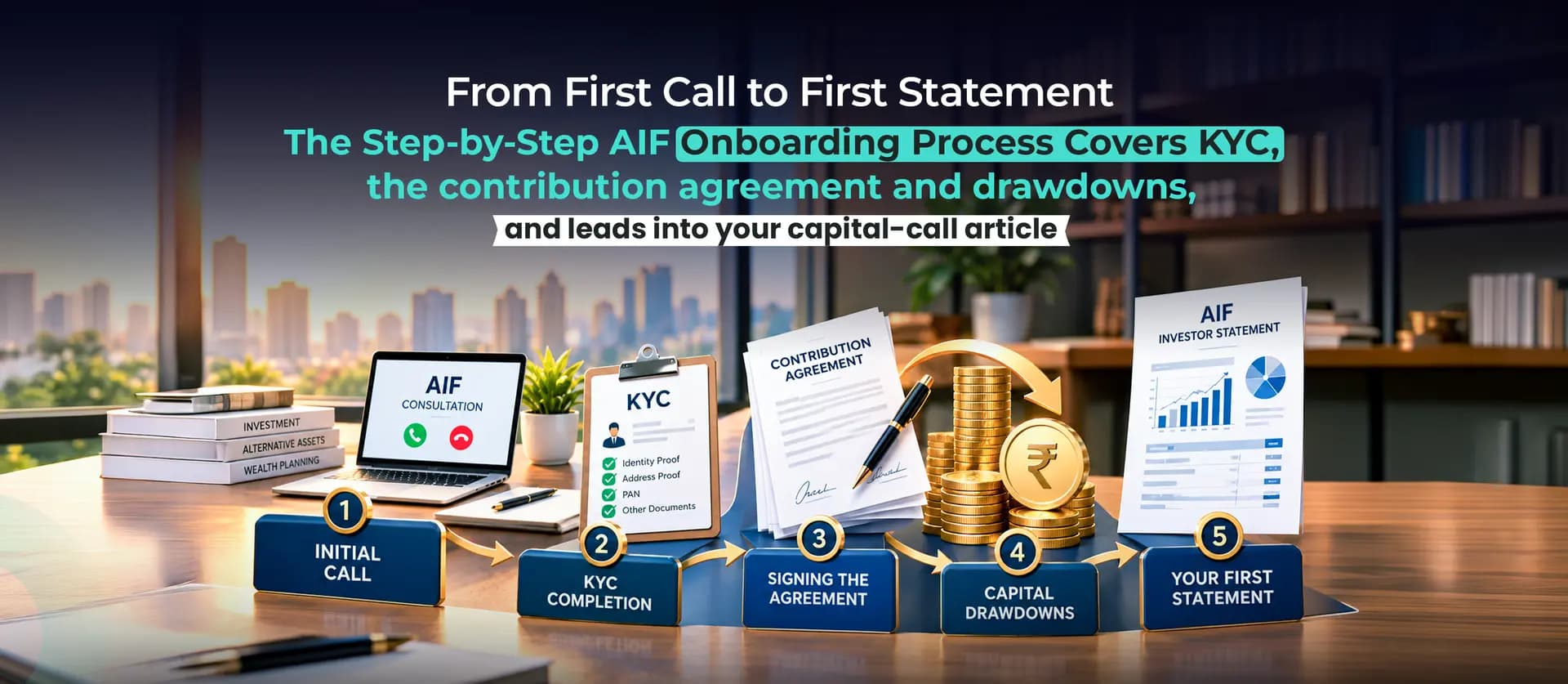
Shortlist the fund and read the PPM
Complete KYC and share your documents
Sign the Contribution Agreement and subscription form
Get admitted and make your commitment official
Receive and pay your first drawdown
Receive your units
Get your first statement and track the fund
The exact order and timing vary by fund, so treat this as a roadmap, not a rulebook. In most cases, the whole process takes a few weeks if your documents are complete.
Everything starts with the Private Placement Memorandum (PPM). It is the fund’s main offering document and covers strategy, fees, risks, tenure, drawdown terms and exit rules.
Before you move forward, make sure you have:
Read the PPM fully, including the risk factors
Understood the fund’s category (I, II or III) and what it can invest in
Checked the minimum commitment, which is ₹1 crore for most AIFs
Asked for any clarification in writing
This is also the time to run the due diligence checks on the manager, as covered in our article on vetting an AIF manager.
Every AIF must know who its investors are. SEBI requires AIF managers to maintain investor-wise KYC details, including name, PAN and bank account details.
Individual investors are usually asked for:
PAN card, and Aadhaar or other address proof
A recent photograph
Bank account details and a cancelled cheque
Demat account details (DP ID and client ID)
FATCA and CRS self-declarations
Source of funds or source of wealth information
Nominee details, if applicable
Companies, trusts, LLPs and HUFs generally need additional documents, such as incorporation papers, authorised signatory lists, board resolutions and beneficial ownership declarations.
Practical tip: Check that your PAN is valid and linked to Aadhaar. As of June 2023, a PAN not seeded with Aadhaar was no longer considered valid for KYC purposes. A KYC mismatch is one of the most common reasons onboarding stalls.
This is the step that turns your interest into a legal commitment. The two key documents are:
The Contribution Agreement (or subscription agreement). It sets out your commitment amount, how and when the fund can call capital, fee terms, transfer restrictions and what happens if you default.
The subscription or application form. It records your details, your chosen unit class and your acknowledgement that you have received and understood the PPM.
Read these carefully before signing. Pay particular attention to:
Commitment size and unit class, since fees often depend on the amount you commit
Drawdown terms, including notice period, payment deadline and any grace period
Default provisions, such as interest, penalties and possible loss of rights or units
Transfer and exit terms
Any side letter, if you are negotiating special terms
Once you sign, your commitment is binding. Signing the agreement does not mean you pay the full amount at once, but it does mean you must be ready to pay when the fund calls.
After the fund reviews your documents and approves your KYC, it accepts your subscription and admits you as an investor. In many funds, this happens at a “close” (first close, second close and so on), when the manager formally accepts a batch of commitments.
You may receive a confirmation or acceptance letter stating your commitment amount and unit class. Keep it safe. It is the starting point for reconciling all your future statements.
Now comes the part many investors misunderstand. Your commitment is not collected on day one. The fund calls capital in instalments through a drawdown notice, which states the amount, the purpose and the due date.
Notice periods are often around 10 to 15 business days in practice, but your agreement sets the exact period.
Some funds ask for a first contribution soon after admission, to cover fees and initial investments.
Late payment can trigger the default provisions you read in Step 3.
Keep sufficient liquidity ready for the full commitment, not just the first call. We cover exactly what happens if you miss one in our article on what happens to an investor who commits ₹1 crore to an AIF and then defaults midway, which is the natural next read after this one.
Once your contribution is received, the fund issues units to you. SEBI has made this digital: in June 2023, SEBI mandated AIFs to dematerialise units within a set timeframe. That is why your demat account details matter at onboarding.
If you haven’t shared demat details, the process still works. Units are held in an aggregate escrow demat account, and once you provide your demat details they must be transferred to your account within 5 working days. The sooner you share your details, the smoother this is.
Note that holding units in demat form does not make them freely tradable. The terms of transferring AIF units continue to be governed by the PPM and subscription documents, even after dematerialisation. Transfers typically need the manager’s prior consent, and the manager must also complete KYC on the incoming investor.
Your first statement is your first real checkpoint. The format and frequency differ by fund, but a good statement should show:
Your total commitment, amount contributed and uncalled commitment
The number of units held and the unit class
Fees and expenses charged to you
The fund’s NAV or valuation, as per its reporting schedule
When it arrives:
Reconcile it against your drawdown notices and bank debits
Check the fees against the PPM and your unit class
Confirm your details, such as name, PAN and demat account
Raise any mismatch in writing with the manager or your distributor right away
From here, expect periodic reports, capital account statements and further drawdown notices over the fund’s life.
Signing without reading the default and transfer clauses
Using a PAN or bank account that doesn’t match your KYC records
Skipping demat details, which delays unit credit
Assuming “commitment” means “pay only when convenient”
Not keeping copies of the signed agreement, acceptance letter and every notice
Forgetting to plan liquidity for later drawdowns
☑ Read the PPM and risk factors
☑ Keep KYC documents ready (PAN, address proof, bank and demat details)
☑ Read the Contribution Agreement line by line
☑ Confirm your unit class and the fee that applies
☑ Note the drawdown notice period and default terms
☑ Keep liquidity ready for the full commitment
☑ Check your first statement against your payments
Onboarding to an AIF is not just a form and a payment. It moves you from interested investor to a legally committed one, with KYC, a binding agreement, staged drawdowns, digital units and regular statements. Get these steps right, and the rest of your AIF journey is far smoother.
Disclaimer: This article is for educational purposes only and is not investment, legal or tax advice. AIF investments are subject to market risks and returns are not guaranteed. Onboarding documents, timelines, drawdown terms and reporting formats differ across funds, and regulations may change. Please read the PPM and Contribution Agreement carefully, verify the latest SEBI rules, and consult your advisor before investing.
0

2

0
Publish Date
Reading Time
Last Updated
Social Presence


Table Of Content