Category I: Higher risk, but the potential is bigger
Category I funds invest in startups, small businesses (SMEs), and infrastructure projects. This is the riskiest category, but it's also where you see some of the best growth stories.
A good example is Alpha AMC's VentureX Fund I. It's a ₹500 crore (green shoe of ₹250 crore) fund that invests in SMEs before they go public. In April 2026 alone, it returned 21.9% — better than the Nifty SME index (19.6%) and way better than the Nifty 50 (6.6%). What's impressive isn't just the number — it's how careful the fund is. Out of 1,142 companies they looked at, they only invested in 35 of them. That's a selection rate of just 3%. And they plan to spread that money across around 50-70 companies, so no single company failing can hurt the fund too badly.
The catch with Category I funds: you usually don't see real results for 1-3 years, since startups and small businesses take time to grow. But if the fund survives that long, returns of 20-30% per year (or more) are possible.
Category II: The safer, more popular choice
Most rich investors in India put their AIF money here, and it's easy to see why — Category II includes private equity, private lending, and real estate debt, and there's an option for almost every comfort level.
Private credit funds (the safest option in this category) lend money to mid-sized businesses and earn 14-18% per year through secured, collateral-backed loans.
Private equity funds invest directly in growing private companies (healthcare, consumer goods, manufacturing) and aim for 20-30%+ returns over 5-7 years.
Real estate funds lend money to property developers, secured against land, and earn 15-20% with a clear exit date.
Some real examples: JM Financial Asset Management launched its first pre-IPO fund in February 2026, targeting a ₹1,500 crore corpus and focused on companies expected to list within 18 months, marking its entry into the fast-growing pre-IPO space. Chanakya Opportunities Fund II is a newer 2026 fund doing something similar, focused on small, high-growth companies in manufacturing and clean energy.
Category III: For experienced investors who want steady performance
Most stable, but no single standout return number (typically 12-15% profit share above an 8-10% hurdle)
These are India's version of hedge funds — investing in the stock market using long-only or long-short strategies. Names like Motilal Oswal, ASK, and Alchemy run long-only funds; Tata, Kotak, and Avendus run long-short. The goal isn't one big number — it's steady performance whether markets go up or down.
Bottom line
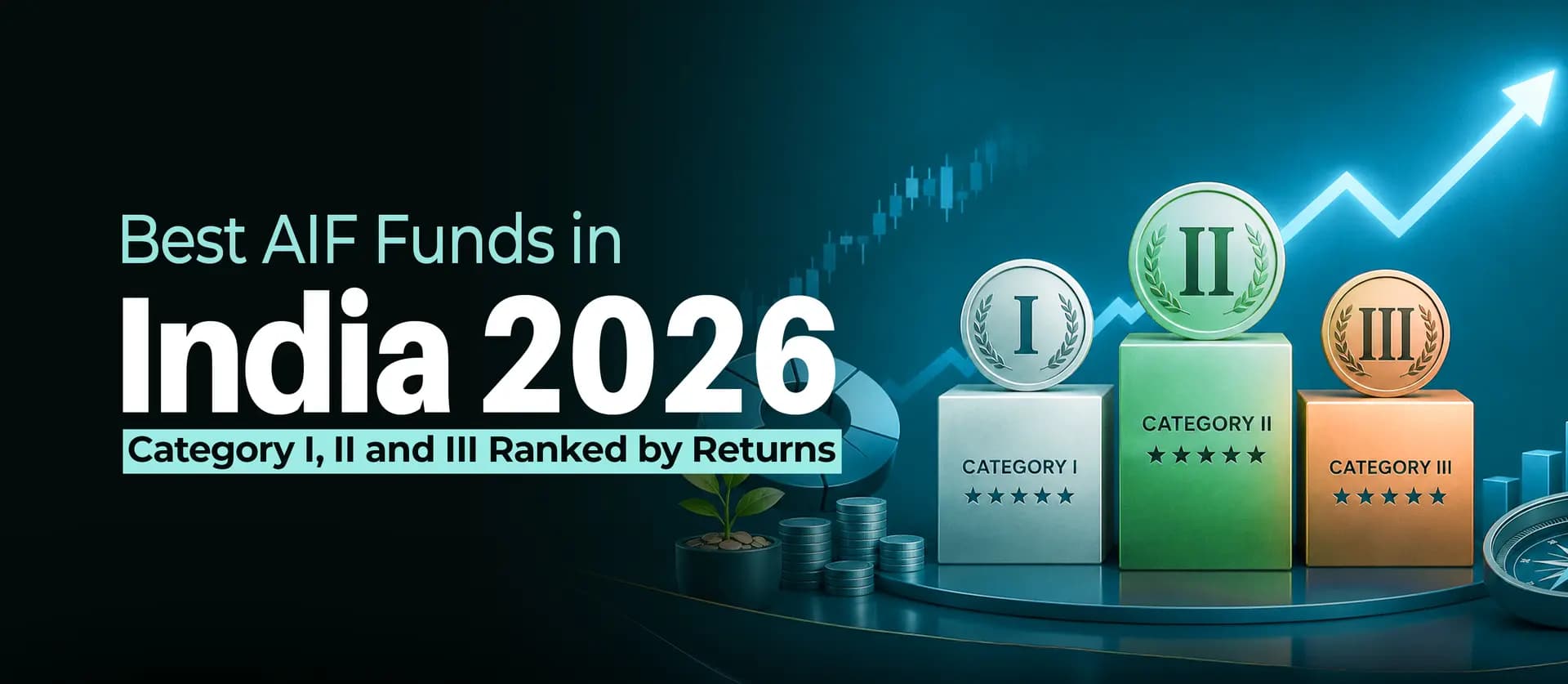
Ranked purely by return potential: Category I > Category II > Category III. But higher return always comes with a trade-off — Category I ties up your money the longest and carries the most risk if a fund's bets don't pay off. Category II sits in the middle and is where most serious AIF money in India actually goes, since it lets you pick your risk level. Category III isn't about chasing the highest number — it's for investors who want stock market exposure without the full swing of the market.
The real answer to "which is best" isn't the one with the biggest number — it's the one that matches how long you can wait and how much risk you can stomach.
0

1

0
Publish Date
03 Aug 2026
Reading Time
3 mins
Last Updated
06 Aug 2026
Social Presence


Table Of Content
Category I: Higher risk, but the potential is bigger
Category II: The safer, more popular choice
Category III: For experienced investors who want steady performance
Bottom line
Tags
