By Devansh Singhal · Published · Updated
What is an anchor investor?
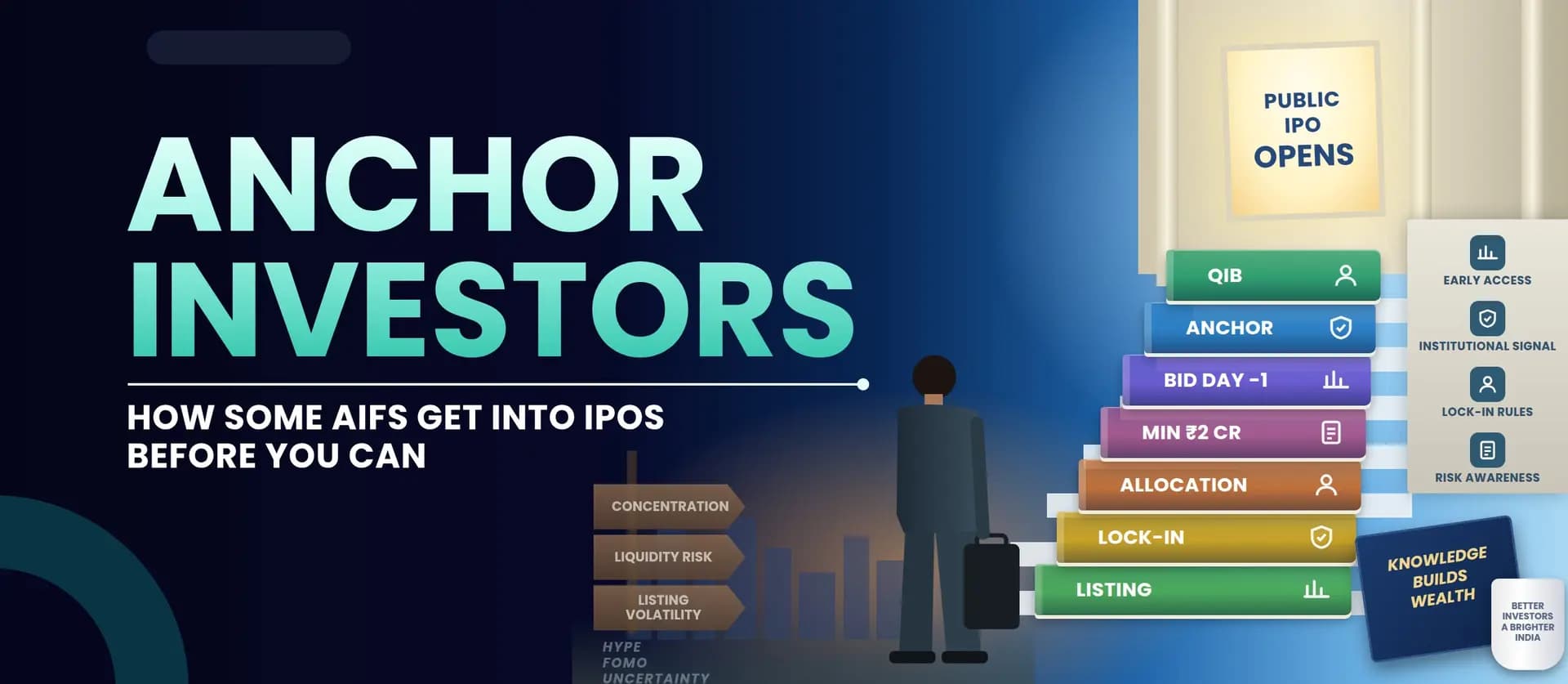
An anchor investor is a qualified institutional buyer (QIB) that buys a large block of shares a day before the official launch of the IPO. Retail investors cannot apply in this category. Mutual funds, insurers, pension funds, banks and foreign institutions are the usual names. SEBI-registered AIFs can also appear in anchor books, subject to the investment conditions in their own regulations and offer documents.
The framework was reworked recently, so older articles may be out of date:
A QIB with a ₹5 crore ticket is not an individual. It is an institution, and an AIF is a pooled vehicle. If you hold ₹1 crore in an AIF (the minimum commitment), you are not an anchor investor. The fund is, and your share of any gain depends on the fund’s size, strategy, fees and what it does after the lock-in ends.
That distinction matters, because “our fund participates in anchor books” is a claim about access, not about returns. Access has real advantages: early visibility into the issue, a known price before the public opens and a disciplined entry. But it is not a guarantee. The shares still trade freely once the lock-in ends, and the anchor price is not a profit. In a typical example, an anchor who bid at ₹500 still has to pay the difference if the final IPO price is fixed at ₹520, so there is no price advantage.
What it does tell you:
What it doesn’t tell you:
The bottom line
Anchor allocation is a legitimate way for institutions, including some AIFs, to enter an IPO ahead of the public. It reflects early commitment, not guaranteed returns. When an AIF cites IPO access, treat it as a starting point and judge the fund on net IRR, DPI and discipline, not on the headline.
Disclaimer: This article is for general information only and is not investment advice. Regulations change, so please verify current requirements with SEBI circulars and the fund’s Private Placement Memorandum. Investments in AIFs are subject to market risks and past performance is not indicative of future results.
0

4

0
Social Presence


Table Of Content
What is an anchor investor?
The bottom line
