By Devansh Singhal · Published · Updated
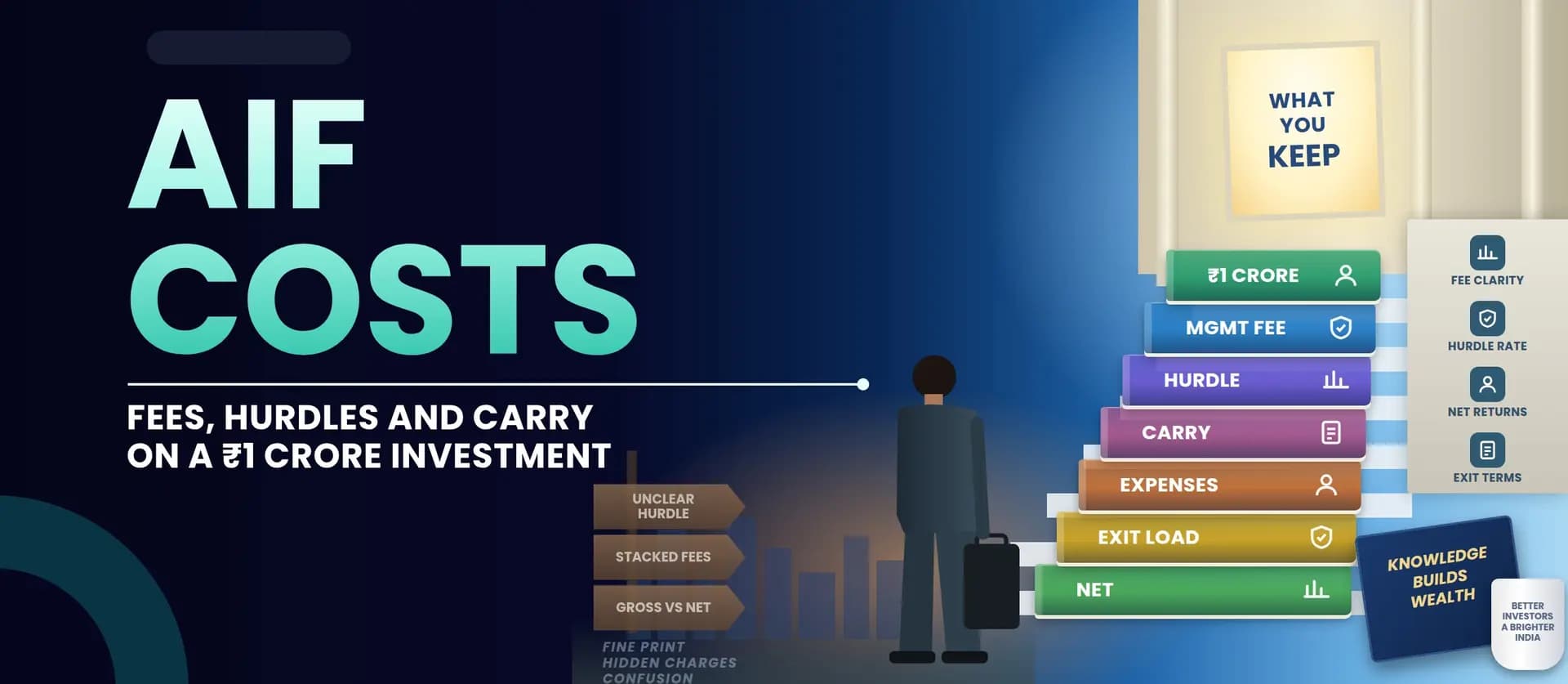
The staircase: where your ₹1 crore goes
Step 1: Your ₹1 crore. In India, ₹1 crore is the minimum commitment for most AIFs. Every cost below is measured against it, so even small percentages matter.
Step 2: The management fee. This is the annual fee the manager charges for running the fund, usually quoted as a percentage per year. Check two things: what it is charged on (committed capital or invested capital) and whether it is charged even when part of your money is still uncalled. A fee on committed capital costs you more in the early years, when the fund has deployed less.
Step 3: The hurdle. The hurdle rate is the minimum return the fund must deliver before the manager earns a performance fee. Think of it as the bar the manager must clear. Funds differ widely here. The rate may be fixed or tied to a benchmark, and it may be compounded or simple. Whether there is a “catch-up” after the hurdle matters a great deal, as the example below shows.
Step 4: Carry. Carried interest is the manager’s share of profits, typically a percentage of gains above the hurdle. It is the largest single cost in a successful fund, so it deserves the most careful reading.
Step 5: Expenses. Set-up costs, fund administration, audit, legal, custody, trustee and distribution fees, and brokerage all come out of the fund. These are easy to overlook because they rarely appear as a headline number. Ask for the total expense ratio and whether there is a cap.
Step 6: Exit load. Some funds charge a fee for withdrawing early or outside the permitted window. Exit load, lock-ins and redemption terms decide what you can do if your plans change.
Step 7: Net. This is what you keep. It is the only figure that tells you what the investment did for you, which is why the poster calls it “What You Keep”.
The bottom line
Costs are not a reason to avoid AIFs. Good managers earn their fees, and a strategy that delivers well after costs is worth paying for. The point is to see the full picture before you commit, so that the returns you are shown are the returns you keep. As the poster puts it, knowledge builds wealth, and better-informed investors make for a better market.
Disclaimer: This article is for general information only and is not investment advice. The example uses assumed figures and does not represent any specific fund. Fee structures, taxation and terms vary by fund, so please read the PPM carefully and consult your advisor before investing. Investments in AIFs are subject to market risks, and past performance is not indicative of future results.
0

6

0
Social Presence


Table Of Content
The staircase: where your ₹1 crore goes
The bottom line
